
What this means for content visibility
The way people discover information has forever changed.
Large Language Models like ChatGPT, Gemini, DeepSeek and Claude have gone from what was initially considered a novelty experience to a core part of the internet. According to a new study by Similarweb, Generative AI (GenAI) systems have progressed beyond just influencing how users start their journeys; they are now a core destination.
As we wrap up 2025, we’re seeing that it’s no longer a niche group of users leveraging AI; it’s a substantial share of netizens.

Image source: Similarweb
AI adoption is increasing at a significant pace
So, how much has it grown? The 2025 Generative AI Landscape study shows growth across major engagement channels. Some key highlights include:
- A 76% increase in monthly visits to GenAI platforms year over year
- A 319% increase in LLM app downloads across the category
- Older audiences (45+) are the biggest drivers of this growth, growing 14% when other age groups have remained stable
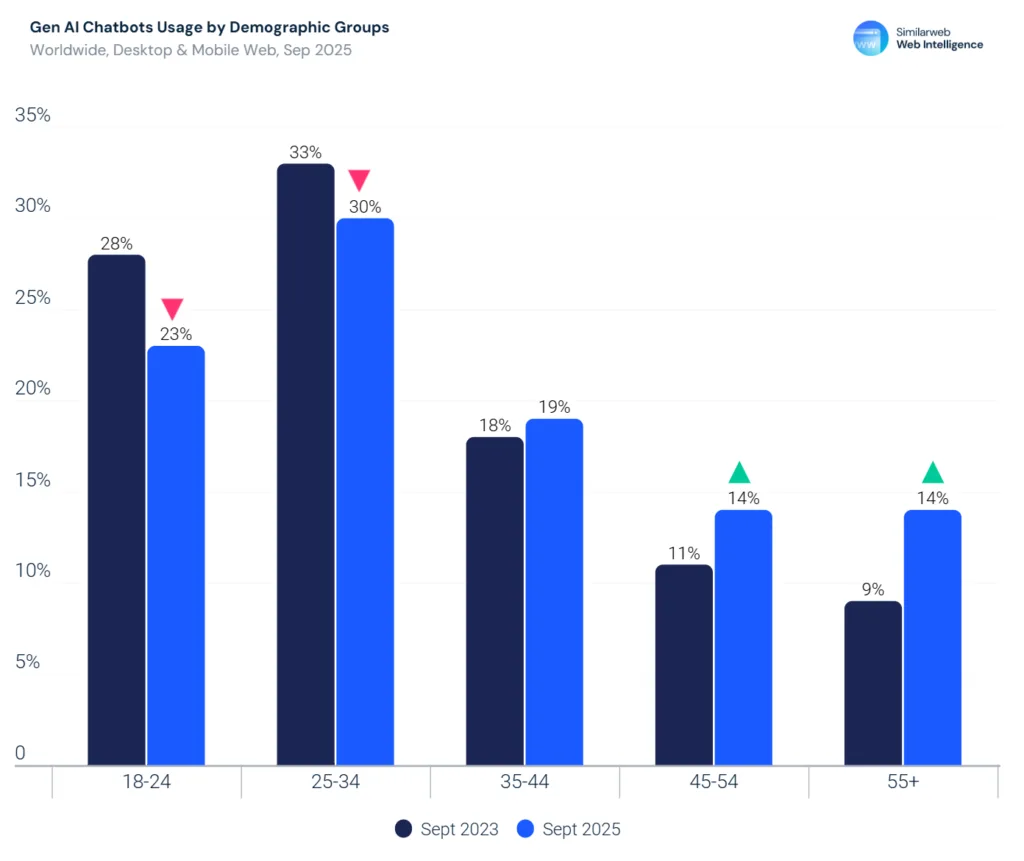
Image source: Similarweb
Another key insight: Traffic going to LLMs is rivaling social media numbers, with ChatGPT becoming the fifth most popular destination on the internet in the United States.
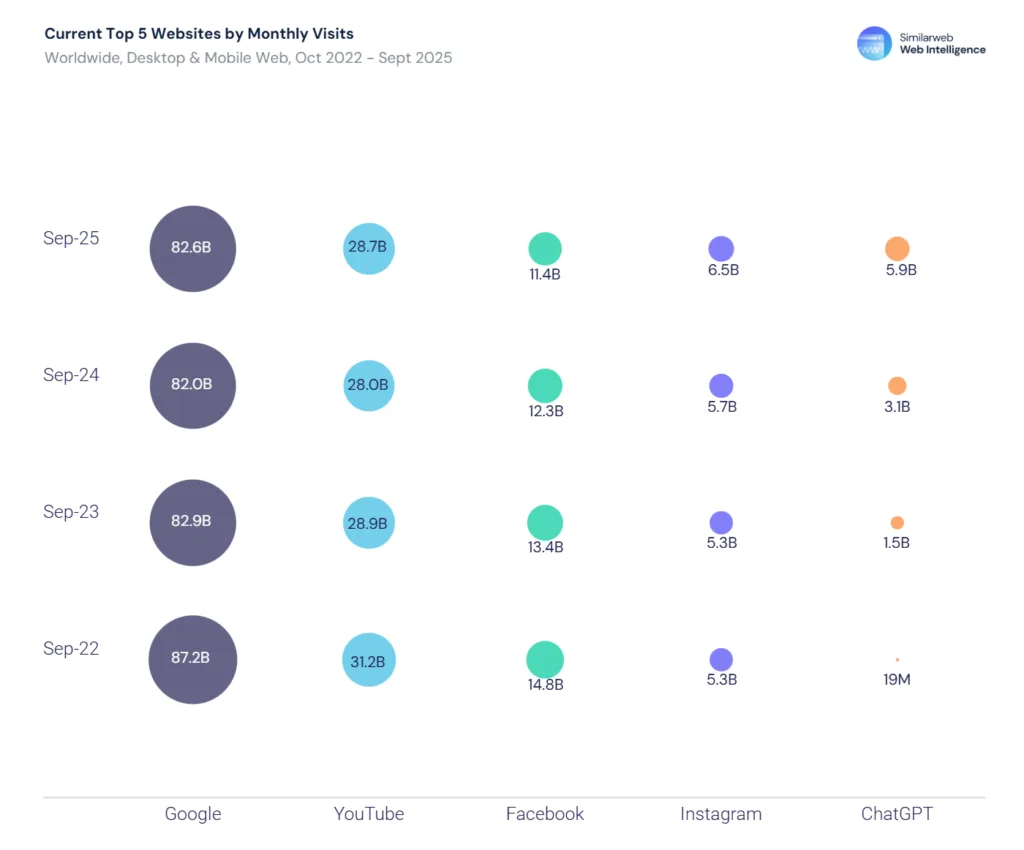
Image source: Similarweb
B2B marketers see the benefits of AI
And those adoption numbers reinforce the need for brands to ensure they are represented in Gen AI.
Norwest recently partnered with Marketbridge to conduct their 3rd annual 2025 B2B Sales & Marketing Benchmark Report. Findings confirmed that marketers investing in AI Optimization say it is having a huge influence on performance. When we asked which AI-enabled use case had the most impact on their efforts, AI Search Optimization ranked second, with content and copy generation topping the list.
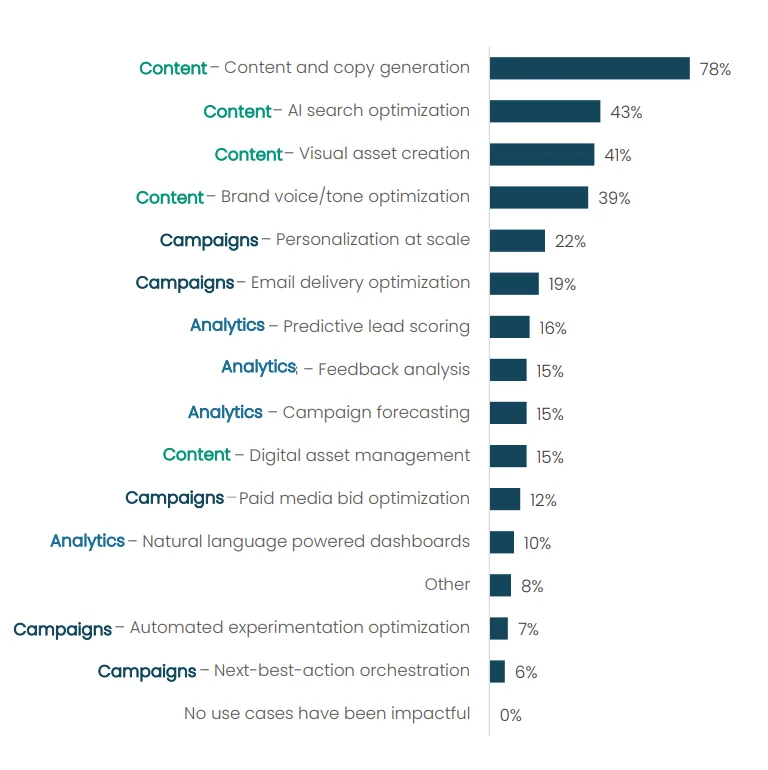
Image source: Norwest
And this makes sense, you go to where your audience is.
The emerging risks
While the benefits are promising, there are also practical considerations to consider:
- Uncertain ROI: AI referral traffic is growing, but performance varies. Not every content type benefits equally.
- Operational overhead: Creating structured, machine-friendly content requires development time, quality assurance and continued monitoring.
- Crawl volatility: AI tools are aggressive crawlers. This can increase server load and create unpredictable logs if not monitored.
- Evolving standards: The AI ecosystem is still shifting. What works today may need adjustment within months.
These risks do not outweigh the opportunity, but they should be factored into infrastructure planning.
What does this mean for B2B brands and their content?
For B2B organizations looking to maintain visibility in this evolving landscape, understanding current LLM performance provides the best foundation for strategic action. When trying to improve performance in an LLM environment, auditing how and where your content currently appears in AI-generated responses gives brands actionable insights. Here are some key considerations:
For content owners
GenAI’s ability to discover new content hasn’t grown as quickly as its adoption. In fact, when LLMs search for sources, they use relatively simple technology and can miss significant parts of a brand’s message.
AI platforms prefer content that is well-structured and backed by clean code, so elements like schema markup, semantic HTML, and consistent authorship information matter when trying to gain GenAI visibility.
For social media
LLMs often have preferred social media sources, so you may see an over-index on Reddit, YouTube or LinkedIn when analyzing their citations. If your brand maintains a social presence, leverage all available optimization options on each respective platform to improve visibility, including strategic use of hashtags, descriptive titles and detailed descriptions.
The more structured and contextually rich your social content, the more likely it is to be surfaced by GenAI.
For PR
Authoritative spaces like news sites and well-known publications are often included as referenced sources for many LLMs, though the weight can vary by industry and platform. Having content published about your brand in these prioritized sources not only creates credible touchpoints for users but can also influence LLM responses.
Strategic media placement is now serving a dual purpose: reaching human audiences and training AI systems on your brand narrative.
Taking action
GenAI has become a structural part of how users access information. Organizations that take steps now to make themselves more AI-friendly will be better positioned as buyers continue to adopt usage.
While the exact impact is still evolving, the opportunity is significant and justifies investment. Brands that treat AI optimization as a strategic priority will maintain visibility in a landscape where Search and Social are no longer the only gateways to information.