Behavioral segmentation improves brand marketing ROI

Marketing effectiveness case study

Behavioral segmentation improves brand marketing ROI

The challenge

How much does brand marketing really drive new customer growth?

A client in the internet security space was struggling to drive meaningful growthThe category saw increased competition with lower-cost products entering the market, claiming incumbent market share.

Despite increased marketing investment, our client’s revenue was flat. The New Customer segment was showing some growth, but other business metrics weren’t improving.  

The objective

Optimize brand efforts

The client wanted to understand if recent brand efforts were effective in acquiring new customers and how to optimize their investment for the purpose of additional growth and scale.

Part 1: Understand new customers

Find the drivers of growth in the new customer segment by exploring:

Part 2: Model brand responsiveness

Model brand efforts’ impact on sales using media mix modeling (MMM) in order to:

The solution

Advanced brand modeling based on behavioral segmentation

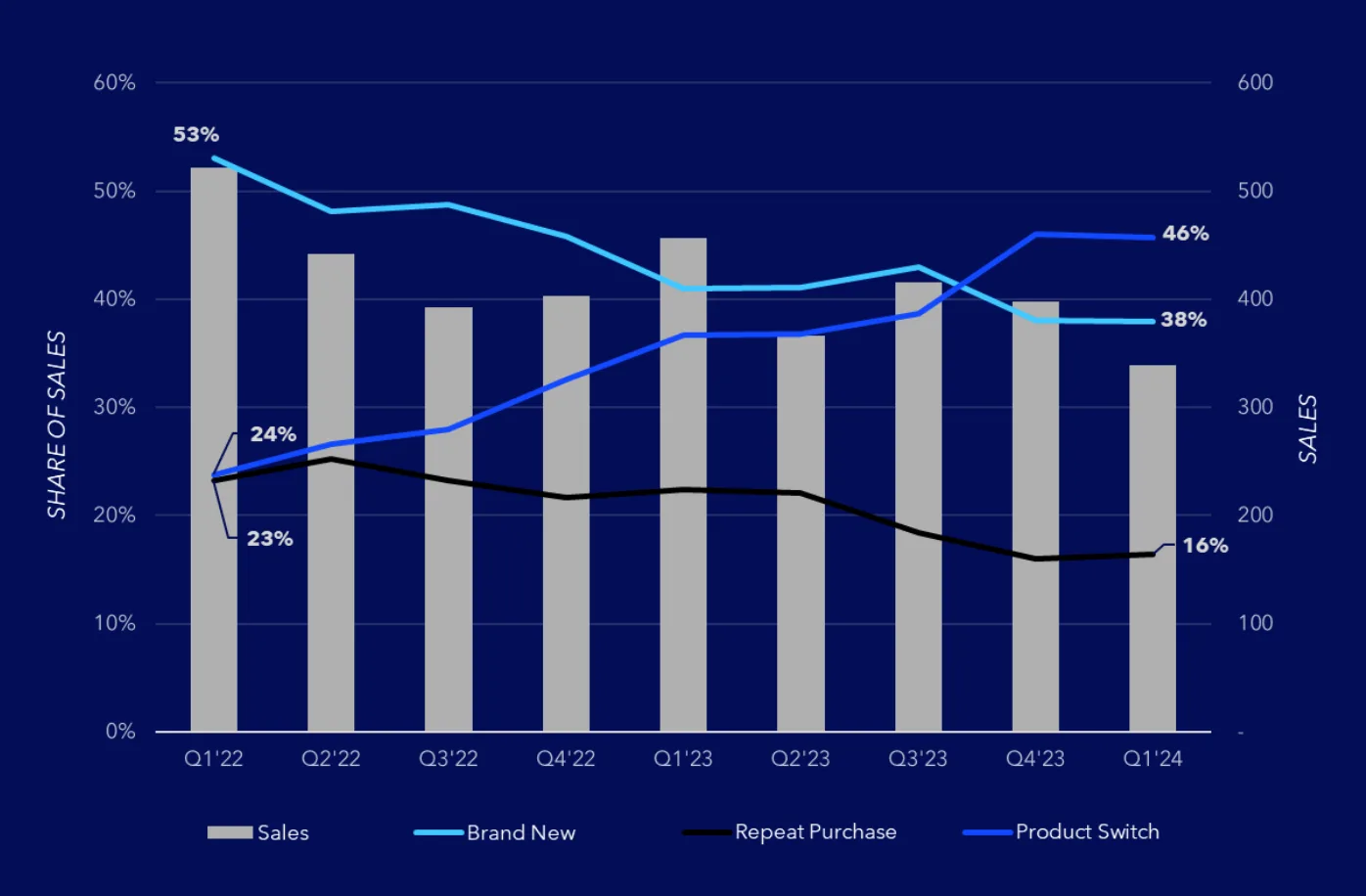
We uncovered that the “new customer” segment was actually two distinct segments combined into one: customers who were truly new acquisitions and those who had upgraded their product from a previous version. 

Combining these two segments camouflaged a shrinking pool of brand-new customers, as the upgrader group was the segment showing real growth.

Part 1: Create behavioral segments

We leveraged internal client data to enable more accurate and actionable audience segmentation:

(A) Behavioral Segmentation

Defined mutually exclusive, collectively exhaustive (MECE) behavioral segments using existing data

(B) Segment Deployment

Deployed new segmentation in the client’s marketing database for real-time audience targeting and conversion labeling

(C) Segment Reporting

Developed reporting on these segments over time to validate shifts in audience mix align with the client’s strategic goals
Behavioral segmentation case study

Part 2: Quantify new customer brand engagement

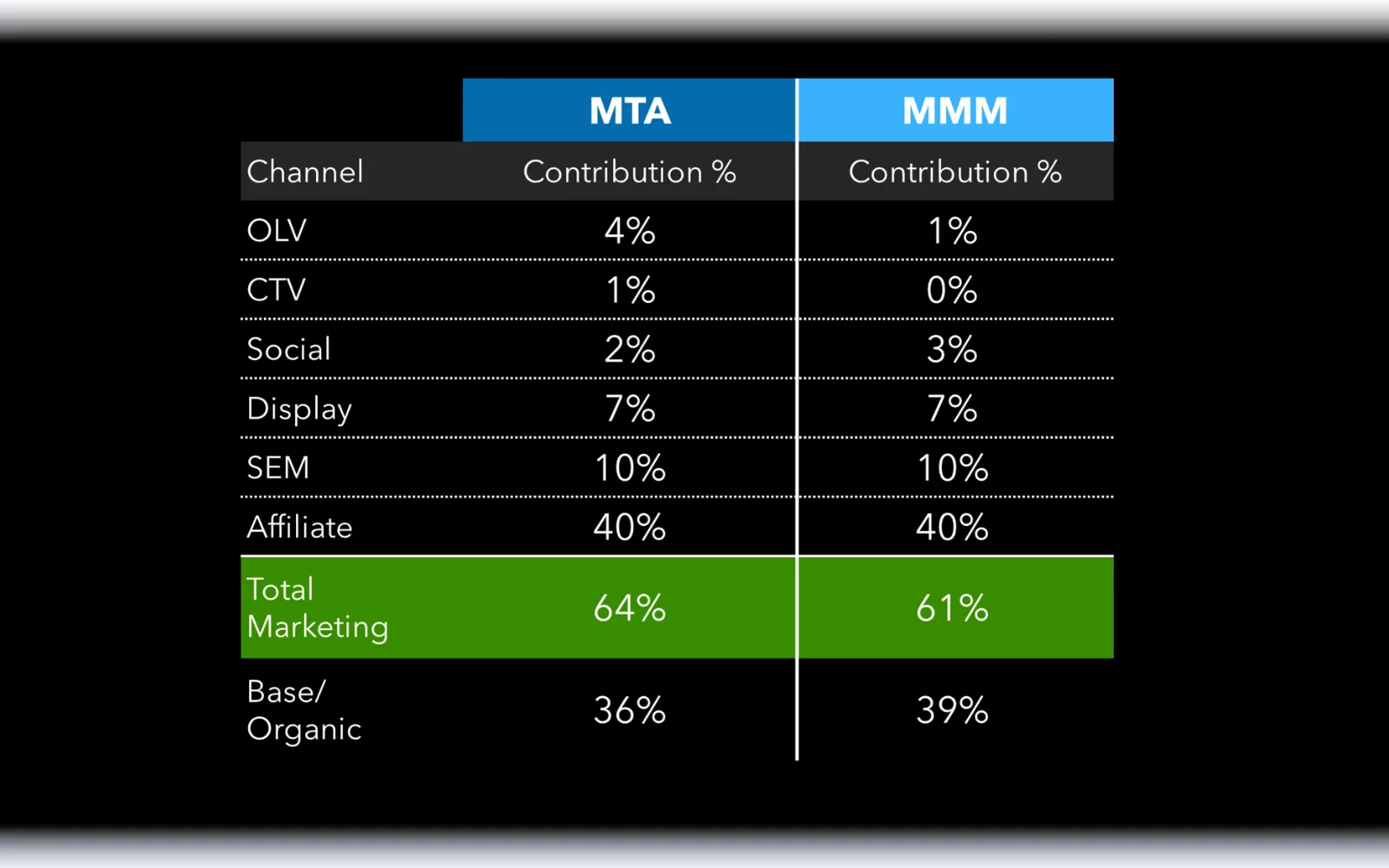
We used media mix modeling (MMM) and multi-touch attribution (MTA) to determine which channels drove purchases among the newly defined brand-new customer segment:

(A) Measured channel effectiveness

Built effectiveness models to determine the channels and platforms that had the greatest impact on brand-new customer acquisition, generating marginal response curves to aid in scenario planning.

(B) Calculated true marginal cost-per-acquisition

Econometric models revealed that brand investments were highly effective at generating new customer acquisition.

Unsurprisingly, these efforts did little to entice product switchers. Splitting out these segments pointed to significant budget readjustments.

Business impact

Brand campaigns targeting the right segments led to improved ROI and growth

With our insights and recommendations, the client was able to increase their marketing ROI and optimize their budget towards increasing both brand-new and existing customer conversion rates.

Improved targeting

Look-alike audiences under the former “new customer” segment yielded poor targeting and muddled segmentation.

Leveraging the “brand-new” customer segmentation resulted in better targeting and improved conversion rates, decreasing acquisition costs. 

Optimized brand investment

Brand awareness efforts attracted brand-new customers, while more mid-funnel activities and affiliates drove product switching among existing customers. This insight led to executive approval to move budget up-funnel to acquire more brand-new customers.

The client also moved existing customers into up-sell campaigns and suppressed them from new customer acquisition efforts to improve ROI across both initiatives.

Insurance provider exceeds growth projections by 61% with strategic market expansion​

Growth strategy case study

Insurance provider exceeds growth projections by 61% with strategic market expansion​

The challenge

What’s the secret to conquering an untapped market?

Sustainable revenue growth relies on successful market expansions, yet many enterprises struggle to answer key questions like ‘Who is the customer?’ and ‘How do we deliver value efficiently?’ In the health insurance market, strict regulations and regional monopolies make it even more challenging for smaller players. A leading national insurer sought to capitalize on the success of a rapidly growing product and expand into an untapped market. Despite strong growth and margins, they lacked insights into the space and its consumers, making it difficult to establish themselves as a top competitor.

The objective

Strategize market penetration to expand footprint

The insurance provider partnered with Marketbridge to assess the market landscape and plan their expansion. They aimed to grow their market share and increase their footprint by over 50%. First, they needed a clear understanding of their current and potential market, along with a better sense of product-market fit. Then, they focused on refining targeting, messaging, and consumer outreach to effectively engage the new audience.

The solution

A targeted strategy for customer expansion

Step 1: Market sizing

Marketbridge started with a comprehensive market sizing analysis, evaluating growth projections, segment opportunities, and the client’s planned expansion into new states. The findings revealed the potential for the client’s market footprint to double, with the possibility of acquiring over one million new customers in the coming years. With this significant growth opportunity, it was critical for the client to act decisively and efficiently to capture market share.

Step 2: Customer segmentation

We then conducted both qualitative and quantitative surveys of prospective customers to refine segmentation strategies. By analyzing key metrics like age, marital status, income, and medical history, we identified two primary customer segments. We then further sub-segmented these into five smaller groups, allowing for more targeted and prioritized outreach.

Step 3: Prospect identification

Leveraging public health data, we developed a targeting model using logistic regression to assess the likelihood that a profile in the client’s database represented a potential customer. This model allowed the client to efficiently target prospects with direct mail and other materials for new offerings, successfully identifying 70% of potential customers. We also trained the client on using this model, helping them better allocate resources and focus on high-probability leads, ultimately improving both marketing and sales efficiency.

Step 4: Go-to-market playbook design

With enhanced targeting and segmentation in place, we reviewed the client’s existing sales plays and identified opportunities to optimize agent and broker approaches. Tailored marketing tactics were developed for each stage of the customer acquisition journey, with a focus on educating prospective buyers. Sales and broker tools were also created to guide customers through the process, ensuring they had the right information to drive product purchases. We evaluated the potential impact and ease of implementation for each tactic, prioritizing high-impact actions and low-difficulty solutions for quick wins.

Business impact

Unprecedented market growth

Increased market share-of-voice

Agents were better equipped to guide prospective customers from discovery to purchase. Increased online information and support from primary care providers boosted brand awareness and positioned new offerings across the covered territory.

Improved campaign performance

The new playbook improved the buyer experience and campaign touchpoints. Direct mail and email were more effective, broker support and online resources increased demand, and flexible purchase options and post-purchase support fostered loyalty.

Exceeded growth projections by 61%

With segmentation, targeting systems, and a new sales playbook, the client exceeded acquisition goals. Existing markets saw over 100% growth from 2021 to 2022, and total customer base grew 61%, tripling by January 2022. By July 2022, growth continued with an additional 30%.

SaaS company boosts opportunity value by 40% with competitive compensation

Sales organization design case study

SaaS company boosts opportunity value by 40% with competitive compensation

The challenge

Is our sales strategy built to attract and retain top talent?

As they prepared for the 2022 fiscal year, a software company introduced a new sales coverage model for its top-tier accounts and newly acquired product. To enhance selling capabilities, they created both account management and enterprise selling roles. But leadership faced key concerns—were their sales strategy, territory design, and compensation plans competitive enough? Their existing model lacked pay-for-performance, making it harder to recruit and retain top talent in a competitive market. To drive fast growth and improve hiring appeal, they needed a refined compensation plan that aligned sales incentives with business objectives.

The objective

Driving sales performance through better compensation

By partnering with Marketbridge, the client recognized that a revised pay-for-performance plan could drive stronger sales beyond target metrics—especially for strategic products. An updated model would enable higher target attainment while making the company more competitive in recruiting top enterprise and strategic sales talent. Expanding these roles would not only enhance the customer experience but also increase sellers’ earning potential—all while keeping costs neutral.

The solution

Four-step approach to balancing sales incentives, cost, and performance

Step 1: Post-acquisition integration

Marketbridge helped integrate the client’s newly acquired product and existing product sales team into the global commercial organization to drive incremental growth while minimizing disruption to the legacy team. In addition, they validated their current go-to-market engagement model with the new enterprise and specialist selling roles.

Step 2: Compensation design

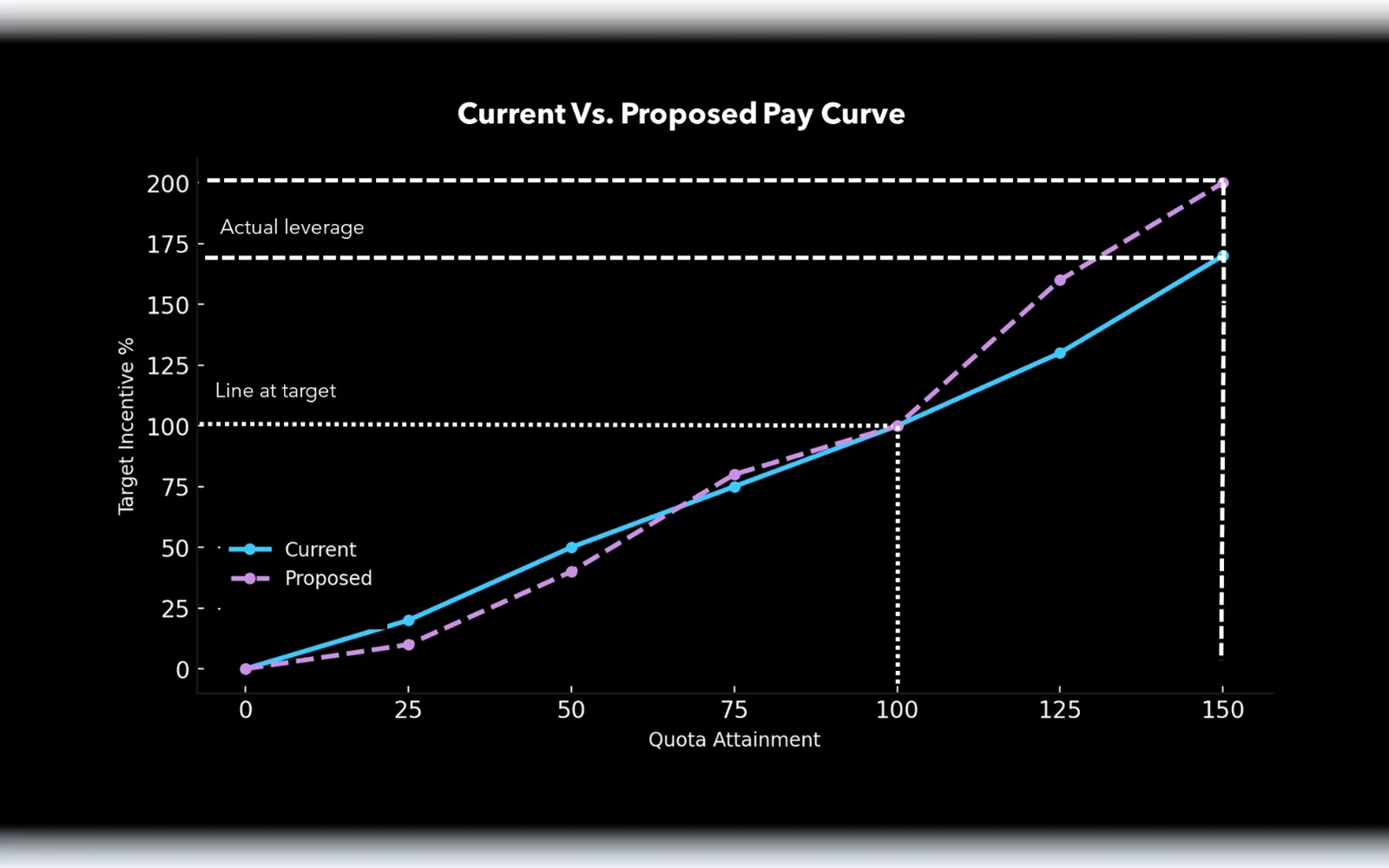
Given the current alignment of strategy and information obtained in the baseline assessment, Marketbridge designed new compensation plans for the newly created enterprise and strategic selling roles. The pay acceleration feature of these new plans not only incentivized the sales team to exceed their targets, but also increased incentives to focus on selling strategic products, accelerating growth in those areas, as well as improving overall quota attainment.

Step 3: Cost projections

To simulate the cost of the new compensation plan to the client, Marketbridge developed a model that utilized a log linear regression to model real world target attainment. By looking at total payout costs for the client in low, target, and high-performance scenarios, it was shown that new compensation plans would save the client money in low performing situations. Additionally, the updated plans had a very strong E/R ratio regardless of attainment level and showed very low incremental cost of employment.

Step 4: Implementation

To facilitate the effective implementation of new compensation designs, Marketbridge laid out an outline for the client detailing key requirements for a successful launch—such as systems integration, sales playbooks, and training on the new plans. Integration of new plans into compensation management and administration was also a key to success on the managerial level. Additionally, Marketbridge created enablement materials to drive improved performance and engagement of the sales team.

Business impact

Accelerated revenue growth and talent acquisition

By aligning incentives with performance, the client drove revenue growth, improved retention, and gained a competitive edge in hiring—all while keeping costs low.

Competitive hiring excellence

With the new pay-for-performance plan, the client attracted top enterprise sellers, tripled their specialist team, and earned a spot on Fortune’s 100 Best Companies to Work For.

Cost-neutral implementation

Despite higher payouts for top performers, the client lowered costs, with sales and marketing expenses under 20% of revenue in Q4 2022—driving both customer and revenue growth.

40% value growth

New incentives drove a 35% boost in bookings, a 40% jump in opportunity value, and 60% YoY growth in strategic products. The executive seller role also improved support and retention.


Designing competitive, customer-first positioning using direct research

Market research case study

Designing competitive, customer-first positioning using direct research

The challenge

How do you stay competitive in a rapidly changing market?

A large software provider planned to shift its entire product portfolio to an as-a-service model by the next year. With competitors already ahead, the company needed to refresh its positioning and messaging to better connect with buyers. Sales teams were unprepared to sell the new offerings, and there was uncertainty about how to present them effectively. The company had to move from a product-focused pitch to one that highlighted customer experience and value.

The objective

Strengthen internal alignment, elevate market impact

To implement a successful SaaS strategy, Sales and Marketing needed broad organizational support for the shift to as-a-service selling. This required clear, evidence-based messaging that explained the change internally and highlighted the superior value for buyers. By updating the positioning with compelling, customer-focused messaging, they could better showcase their unique advantages over competitors.

The solution

Research-backed messaging that differentiates

Step 1: Primary buyer research

First, we conducted primary research to collect insights on buyer priorities and challenges to streamline workflows, use cases, value propositions that resonate best, along with their gaps and unmet needs. Executed a quantitative survey and qualitative interviews with buyers (across three use cases) to collect insights.

Step 2: Messaging and positioning architecture development

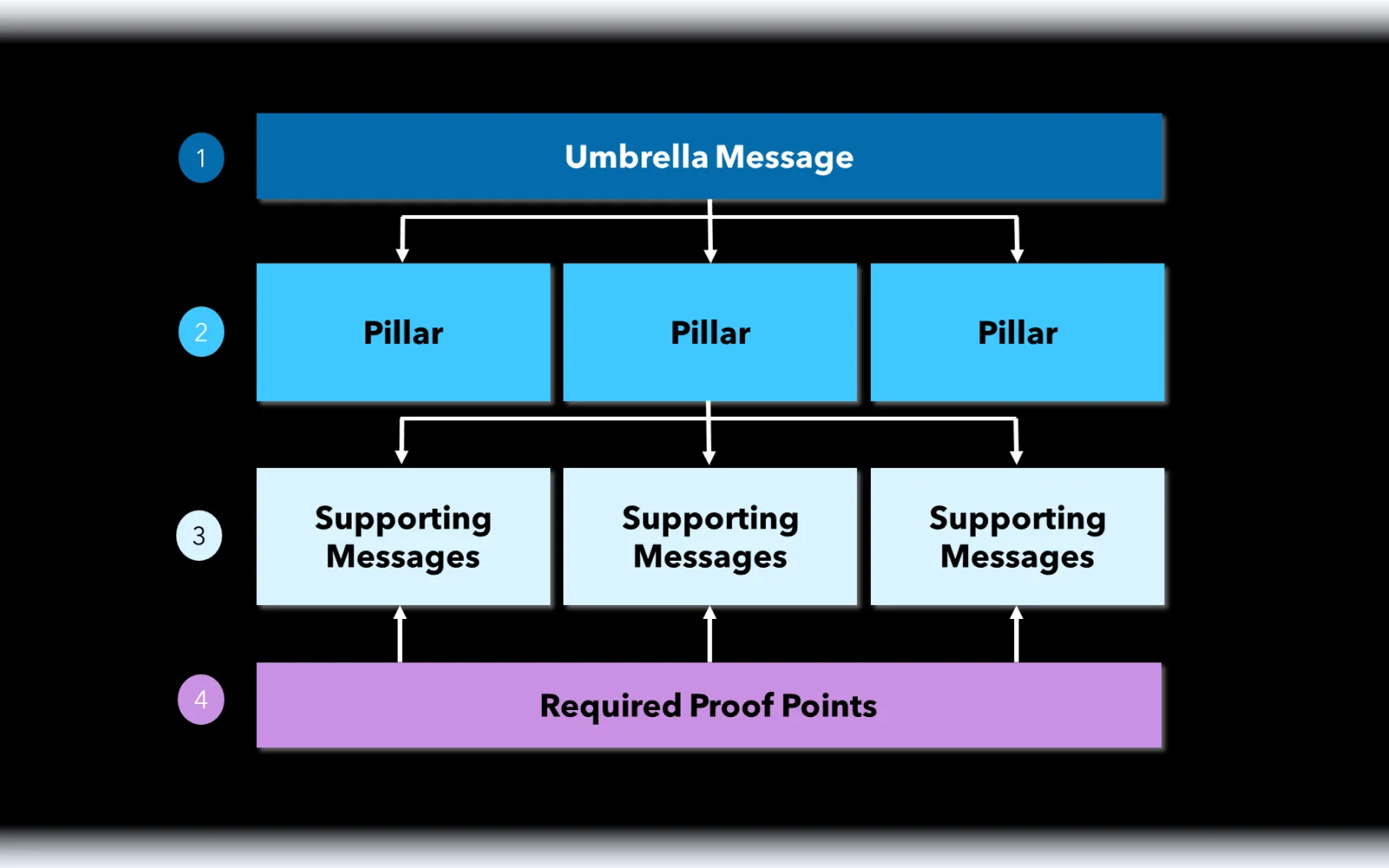
Combined research findings with the company’s vision to create use case agnostic Messaging and Positioning Architecture (MPA) and use case specific / persona specific MPAs. With this, Marketbridge also conducted in-depth competitive research to understand how major and emerging competitors are positioning their XaaS solutions to industries and key personas.

Step 3: Persona development

Used research findings to iterate use case(s) for agnostic MPA and MPAs by role; Executive, Manager, and Individual Contributor for a total of 12 personas. In addition, current messaging and positioning across competitive provider properties were summarized to then spotlight variations in personas and messages.

Business impact

Clearer positioning, greater competitive edge

Identified biggest solution gaps and weaknesses

By gathering insights on buyers’ needs, the provider identified where their messaging needed improvement by use case and persona. This enabled them to compete with established rivals and protect against emerging competitors.

Triggered pivots to messaging

Supplied with comparative marketing messaging, umbrella messages, and supporting points, the marketing team could rapidly change language across their online and offline properties. In addition, they could now ensure a consistent voice for their brand

Informed strongest value drivers by use case & role

Armed both direct and channel partner sellers with succinct positioning statements, differentiators, and proof points. This all informed the optimal sales scripting needed during the evaluation phase of the buying journey.

Embedded support transforms marketing analytics team

Marketing effectiveness case study

Embedded support transforms marketing analytics team

The challenge

How can a fast-moving, budget constrained team power increased marketing ROI?

A consumer internet security client faced a trifecta of lofty goals. Boost upper-funnel brand marketing, launch a new flagship product, and focus acquisition on higher value customers.

The team, led by multiple first-year executives, looked to Marketbridge for embedded analytics support.

The objective

Empower a nascent team to measure marketing effectiveness

The client sought expertise from Marketbridge in realizing a wide-ranging, ambitious agenda: wrangling disparate data, understanding effectiveness, testing to propel future growth, and storytelling with clarity

Part 1: Establish metrics-driven marketing investment

Design a quantitative feedback loop for marketing activity by introducing: 

Part 2: Support new team with analytical know-how

Enable early wins for the marketing analytics team by onboarding team members to:

The solution

An agile extension of the client's team

Given the variety of strategic priorities, Marketbridge served to augment the team’s analytical capacity. Our support to the team evolved into a series of business-critical workstreams, encompassing everything from data engineering within client systems to preparing slides for Board of Directors meetings. 

Part 1: Develop a scalable marketing and customer data asset

We quickly resolved disparate data sources containing marketing spend, website activity, and sales.

The result was a single, scalable Longitudinal Human Record (LHR), which became the foundation for powerful new insights.

(A) Integrated records

Processed clickstream records, vendor reports, and financial records into unified structure by conducting cross-system joins where possible

(B) Accessible codebase

Shared LHR assets with analytical talent on the client side, alongside documentation for future development

(C) Insights reporting

Exemplified executive dashboard reporting and data work for ad hoc analyses from LHR

Part 2: Build media attribution models

Marketbridge built econometric models to accurately assess media investments, advancing understanding beyond Last Touch attribution. 

(A) Media Mix Model (MMM)

Econometrically modeled the impact of marketing stimuli on eventual sales after accounting for seasonality, promotion, and macroeconomic factors as controls, delivering cost-pers and channel response curves.

(B) Multi-Touch Attribution (MTA)

Identified customer pathways to purchase, estimating the impacts of unconfirmed touches (e.g. TV impressions) along the way. 

(C) Media planning

Triangulated outputs across models and test results to drive strategic planning

Part 3: Embed measurement and testing expertise

We supported development of a testing agenda to distill signals into clear insights of strategic importance. 

(A) Test design support

Assisted in matched market selection and budget power analysis for finalization of test design parameters, and conducted incrementality results analysis

(B) Dashboard of sales contributions

Consolidated MTA model results in a real-time dashboard for rapid insight delivery

(C) Storytelling for executives

Assisted writing of executive-facing media investment narrative ahead of Board of Directors meetings

Business impact

Attribution modeling and testing uncovered investment value of upper funnel channels in winning new customers

We enriched our client’s understanding of channel interactions and customer segments through a set of fresh analytical methods for evaluating marketing effectiveness, ultimately guiding our client in how to best invest their marketing spend in a new era of growth.

Budget adjustments

With positive results from deliberate tests of newly incorporated upper-funnel marketing initiatives, the client continued to re-balance their media mix away from duplicative demand-capture channels and towards brand-building and demand generation.

Attribution models reinforced this budget shift, and incrementality tests highlighted the waning effectiveness of price promotions and affiliate marketing tactics. 

Clarified view of acquisition

The newly developed customer data asset powered advancements in segmentation. This translated to a key insight: demand-capture marketing generated mostly low-value, high-churn acquisitions.

Operationalizing a new segmentation, the team was able to measure, test, and scale brand-building tactics against this cleaned segment, raising acquisition efficiency.

2025 B2B sales benchmarks

2025 B2B sales benchmarks

Select insights

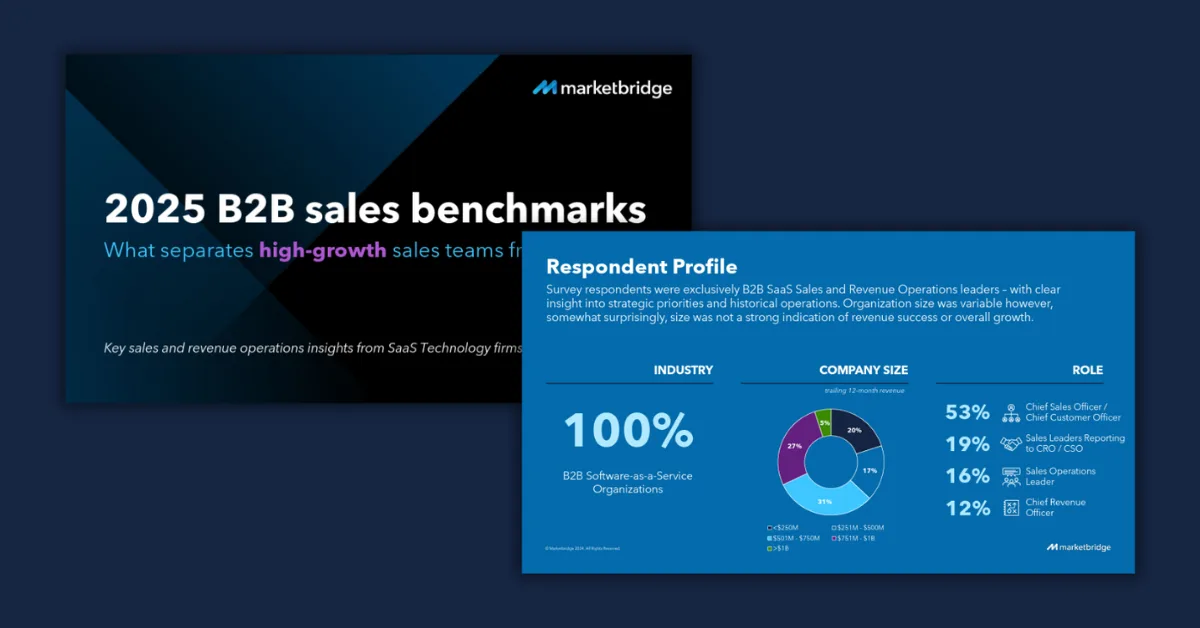
  • 33% of high-growth companies set targets based on opportunity potential rather than existing revenue.
  • Growth leaders employ documented, long-term growth plans and segment-specific strategies while aligning closely with marketing teams
  • Leading sales teams operate with an average of three customer segments compared to two or fewer for lower performers.
  • Industry-specific targeting and account ownership strategies drive greater efficiency, with single account ownership boosting ACVs by 40% compared to hunter-farmer models.
  • Growth leaders align sales compensation with strategy, ensuring motivation and clarity of focus.

Whether you’re looking to optimize sales operations, align your team with strategic goals, or unlock the next level of performance, this report offers the clarity and direction needed to succeed in an increasingly competitive B2B SaaS landscape.

High-growth sales teams don’t just execute better—they think differently

What drives B2B SaaS sales teams to outpace their peers and achieve 20%+ YoY revenue growth? They’re not just working harder—they’re approaching sales with smarter strategies and tighter alignment. This first edition of our annual survey uncovers the mindset, tactics, and structures that set these high-growth leaders apart. Designed for sales leaders and CROs, it provides a clear roadmap to evaluate and activate growth opportunities with precision.

This report covers

  • Key differences between sales team archetypes: Steady Builders, Market Contenders, and Growth Leaders
  • Essential attributes of high-performing sales organizations
  • Building blocks to advance to the next level of growth
  • Five priority actions for sales leaders heading into 2025

What’s next?

The impact of AI on go-to-market strategies, programs, and investments

The impact of AI on go-to-market strategies, programs, and investments

Select insights

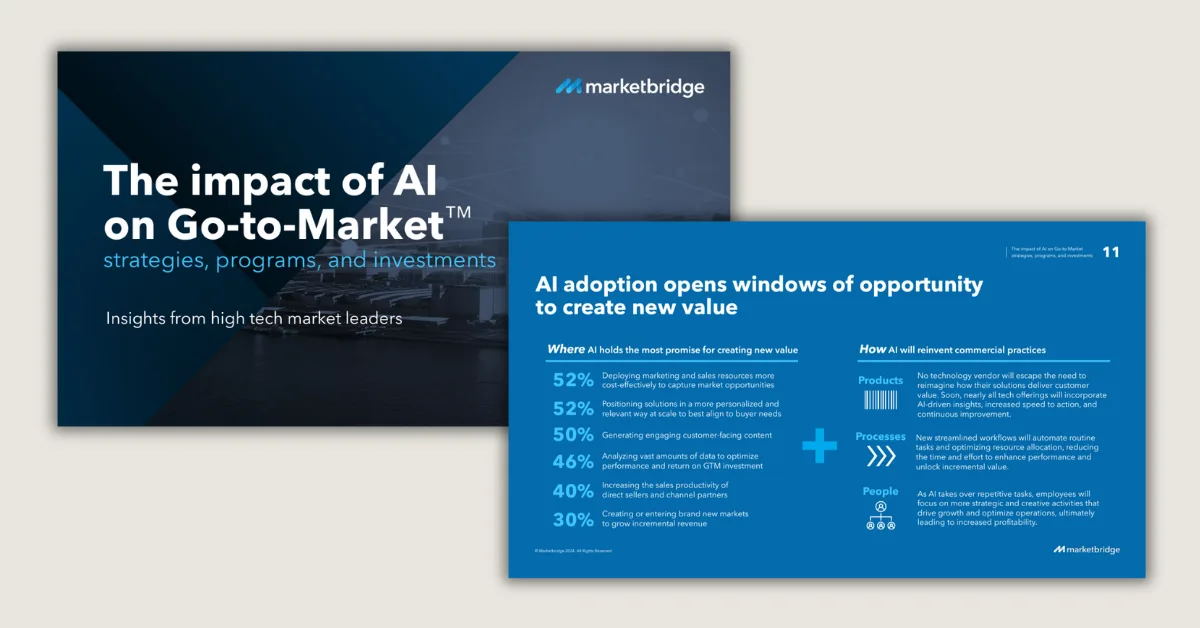
  • 60% of respondents believe changing “Competitive Landscape” is the top area of expected disruption.
  • Over 54% of respondents recognize the urgency to explore new growth opportunities and fund these initiatives more swiftly due to the rapid pace of AI innovation.
  • 58% of respondents predict the most significant change in selecting channels and routes to market.
  • While all leaders recognized the need for substantial investment requirements, not all agreed on where.
Whether you’re navigating the impact of AI on customer personalization, content development, or strategic agility, this report provides the insights needed to stay ahead of the curve.

Research and insights from high tech market leaders

Generative AI (GenAI) is beginning to revolutionize sales and marketing by enabling highly personalized customer interactions, automating complex processes, and providing deep data-driven insights. To explore this further, we surveyed high tech market leaders. The resulting insights can help inform the future of marketing and sales motions—and where to place investments to deliver more effective and efficient Go-to-Market (GTM) strategies—in the age of AI.

This report covers

  • Top areas of expected AI disruption
  • Timeframe for adapting new GTM models
  • Most promising areas for GTM disruption
  • Reimagining jobs to be done within marketing, sales, and strategy
  • Key inputs needed to optimize GTM performance in the AI era
  • Delivering on the promise—top areas of investment needed

Raymarine: A new life on a hundred-year story

Raymarine: A new life on a hundred-year story

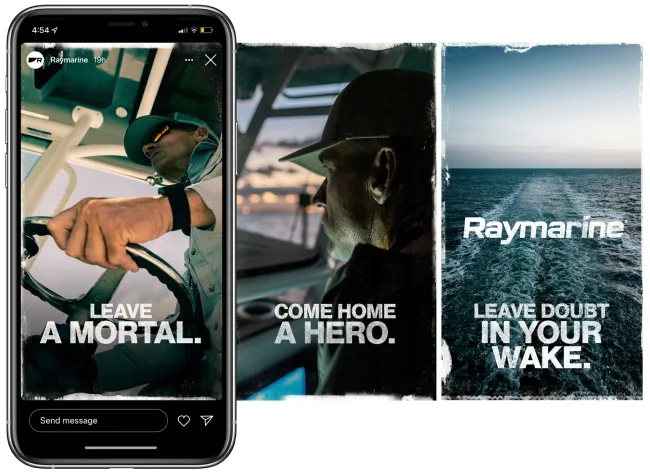
Since 1923, Raymarine has been a trusted, leading name in the marine electronics industry. But, due to stiff competition and product-forward advertising, their brand story was getting lost in a sea of sameness for their boaters and anglers in the United States. The writing was on the wall: They had to do something different. And that’s exactly what we did.

Play video

Leave doubt in your wake

When it comes to marine equipment, there is no room for error and doubt. Boaters and anglers need reliable products they can count on. So, we tapped into that emotional need in order to give Raymarine a new, refined voice that exudes confidence, rugged reliability and trust. We combined influencer partnerships, lifestyle branding and creative storytelling to deliver a brand refresh and 360 campaign that spoke directly to the hearts of those who dare the deep.

Coast Guard stamp of approval

There’s saying your product is trustworthy, and then there’s actually backing it up. The fact that the U.S. Coast Guard was already relying on Raymarine only reinforced our messaging, and having them as brand ambassadors spoke volumes to our audience.

Not just a new brand.
A campaign with bite to launch it.

From the logo to becoming a lifestyle brand, we made a significant shift, found a compelling new storyline and reinvigorated the brand to be forward-thinking yet in tune with the lifestyle of boaters and anglers. We helped support it on the website, as well as through an integrated digital and social media plan to break through the noise.

Putting the pros at the helm of the story

We also partnered with a wide network of pro ambassadors and influencers to capture their own content and show just how well Raymarine’s equipment holds up, even in the toughest waters.

Play video

Bitrise: Buckle up for a really good campaign story

Bitrise: Buckle up for a really good campaign story

Following a recent round of Series C funding, Bitrise—the world’s first and only Mobile DevOps company—needed to build mindshare and market share…and fast. To do it, they needed to convince tech leaders and their development teams at big financial institutions that when it comes to creating extraordinary app experiences, the best things in life aren’t free.

Making the case for mobile-first

Mobile has made huge leaps forward in the past couple of years. To stay relevant and competitive, organizations that jockey for consumer attention and membership, like banks and insurance firms, have to go all-in on apps. At the same time, developing for mobile has become infinitely more complex, and legacy approaches simply can’t cut it in a mobile-first world. Free, open-source platforms—the kind traditional web experiences are built on—were never made for mobile. And it shows, manifesting on the back end as sluggish builds, bottlenecks and a ton of manual (read: risk-laden) work.

We needed to shift
the mental model

Bitrise had a strong product offering and an exciting brand. But to drive awareness and consideration, we needed to shift the mental model and convince tech leaders that investing in a Mobile DevOps platform and retooling their development protocols is better than having a mobile-first competitor snatch your customer base.

Selecting and segmenting for campaign success

Leveraging the predictive intelligence capabilities of ABM platform 6sense, Bitrise identified ~200 accounts in the financial services space that fit their ICP and showed a strong likelihood to purchase a solution like theirs. Marketbridge validated the account selection and acquired contacts to fill coverage gaps across the buying committee through sales intelligence platform SalesIntel. We segmented the audience into two groups—Practitioners (the DevOps doers) and Tech Leaders (the budget-holders), creating unique messaging and mapping content that would resonate with each audience’s motivations, challenges and goals.

Creative unites agility and security (Yes, really!)

The Bitrise brand is playful, confident and attention-getting. To amplify it for ABM, we needed to inject relevance for a finance audience whose main objective is maximizing app experience while minimizing risk. “Buckle up with Bitrise” became our rally cry, suggesting a sense of security but also an impending takeoff.

Our creative big idea focused on the elements of Bitrise’s platform that resonated strongest with our financial audience: the increased speed of development it offers teams and the comprehensive security features built into the platform.

The GTM play gets personal(ized)

The program kicked off with a “Surround & Nurture” play designed to capture attention and raise awareness. Channels and tactics included account-targeted media (display, native and social) and marketing-led emails that Marketbridge helped implement and deploy across their martech tools and platforms.

The most highly engaged accounts coming out of the “Surround & Nurture” play were funneled to a more highly personalized “Engage & Connect” outbound play focused on generating interest and engagement. Following outbound tactics, contact engagement was evaluated in Marketo using 6sense data and routed to Sales to begin an Outreach email sequence—which was automated on behalf of Sales.

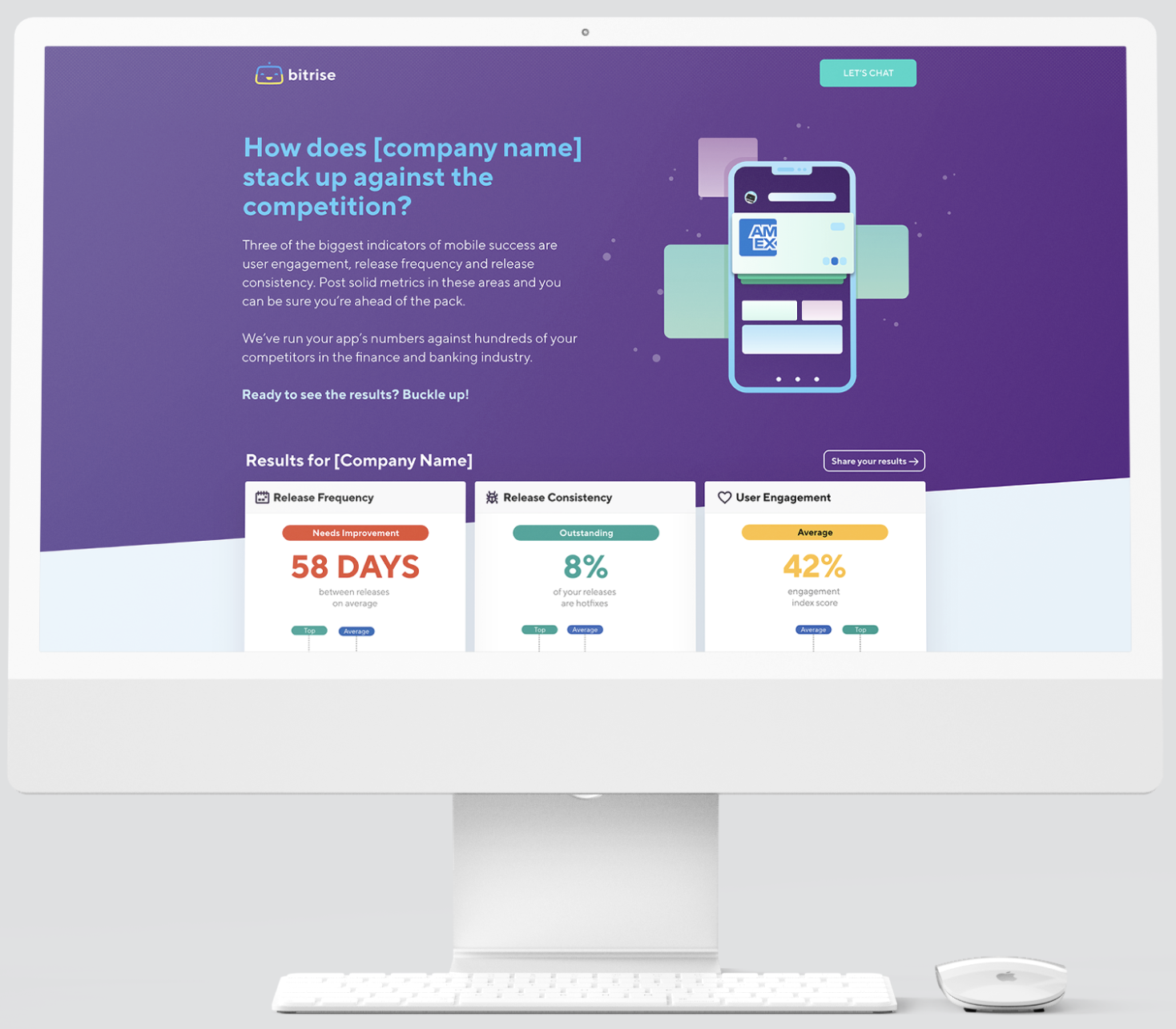
The head-snap moment: account-personalized benchmark experience

Downstream in the “Engage & Connect” play, we directed contacts to a customized digital experience built and hosted in Marketo. Visually, the page was personalized with the account’s logo and name. But that wasn’t the exciting bit. Drawing on data from competitive intelligence platform Apptopia, we benchmarked the account’s mobile app performance against competitors across three key predictors of app store success. For some, the benchmark results were validating; for most, they were a wake-up call.

Buckle up for big results

The program saw wide reach and deep engagement across targeted accounts, and we added hundreds of new contacts into Bitrise’s marketable database for future campaigns. Additionally, we drove impact in buyer journey progression. Using 6sense to benchmark and track pre- and post-campaign buying journey stage movement, we pushed a third of accounts forward 1+ buying stage and grew accounts in Decision and Purchase by 44%. The campaign has gained traction in B2B awards circles as well. “Buckle up with Bitrise” was a finalist in the 2023 B2B Marketing Elevation Awards for Best Account-Based Marketing Program.

The team attributes campaign success to two key factors:

A highly automated campaign

That leveraged a strategic martech stack to deploy and coordinate the cross-channel experience at scale, reducing manual monitoring and management.

Meaningful use of personalization

Across the creative touchpoints, which helped the work stand out and sink in.

0 %

Accounts moved forward 1+ buying stage

0 %

Growth in decision
and purchase stages

0 %+

Decision maker
Leads acquired vs. Target

0 X

Known account
engagement

0 s

New contacts added to database

“The level of personalization and automation [Marketbridge] brought to 
this campaign made all the difference. It up-leveled our execution to get 
our message in front of the right eyeballs.”

– Marketing leader | Bitrise

Graebel: An interactive DEI journey inspires next-level outcomes

Graebel: An interactive DEI journey inspires next-level outcomes

Diversity, equity and inclusion (DEI) has become an important part of many corporate agendas. Graebel knew that its experts could provide strategic recommendations and support to clients wherever they are on their DEI journey. But first, mobility leaders would need to recognize that they could be a catalyst for transformative DEI in their organizations.

Connecting the dots between global mobility and DEI

Prior to launching Graebel® DEI Consulting Services, a first-to-market solution in this space, Graebel, a leading global relocation management company (RMC), set out to educate key audiences about the potential role of the mobility team in building diversity, equity and inclusion. An interactive digital experience called the “Next-Level DEI Journey” became a key tool to build Graebel’s subject authority and inspire a new league of DEI change makers.

Crystalizing a strong POV

To create this asset, we started with category and competitive research, as well as interviews with subject matter experts in both mobility and DEI. Observations and insights were synthesized into a point of view report, which led to a Unique Buying Proposition® (UBP) and a set of key messages. We then crafted a tight narrative to anchor the interactive journey and all supporting marketing materials. Boiled down to its simplest form, the beats of the DEI narrative were:

1. DEI is the right thing to do—from a cultural and business standpoint.

2. Mobility professionals are uniquely suited to unlock the potential of DEI. 

3. Graebel can help you take DEI from baseline activities to something transformative.

A next-level digital experience takes shape

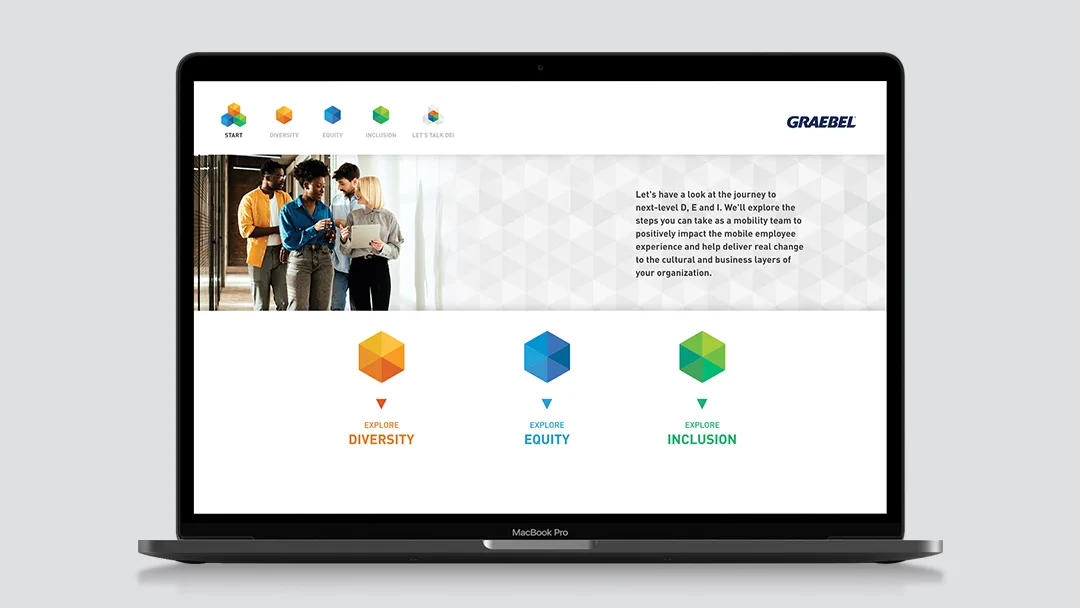
Built on the interactive content platform Ceros, the experience begins by inviting users to jump into a path—Diversity, Equity or Inclusion. The user is then oriented to the journey, a spectrum of maturity in the context of global mobility.

Users explore the three stages of the journey, at each step unpacking what it means from the vantage point of the mobile employee, the mobility team and the organization. Like any great digital experience, it’s most interesting when you try it for yourself.

Persuasion through resonance and relevance

The strategic use of motion, color, iconography and navigational cues guide the user seamlessly through the journey paths while allowing them to pop in and out fluidly. We built persuasion into the experience in multiple ways: 

Quotations in the voice of the employee establish empathy.

Statistics add evidence and credibility to fuel cross-functional buy-in.

Actionable steps make progress feel within reach.

“What I love most about the DEI experience that we created together is its utility. Our sales teams use it in relationship-building conversations. Our client teams use it to gauge readiness and build roadmaps. And it gives prospective clients another great reason to consider Graebel.” 

– Tasha Johnson, VP Global Marketing | Graebel